
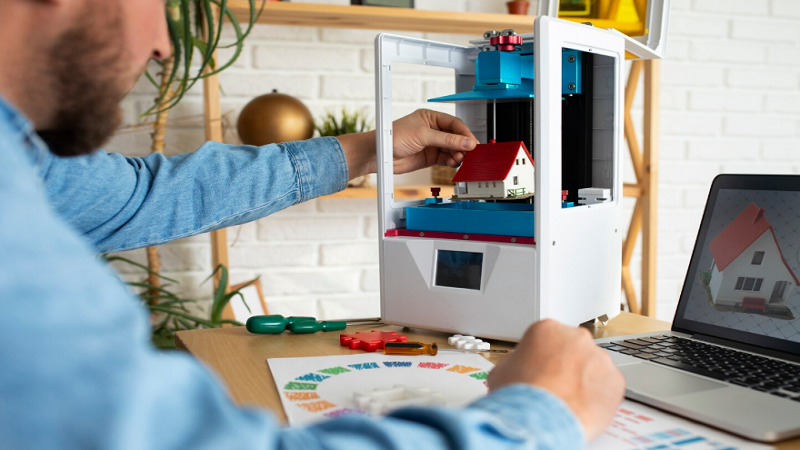
3D printing is changing the way people create, customize, and produce physical objects. From personalized collectibles and creative projects to prototypes and practical models, 3D printing allows more people to turn digital ideas into real-world products.
However, as 3D printing becomes more accessible, the biggest challenge is no longer only the printing process itself. Creating a suitable 3D model, adding realistic details, preparing files for printing, and making sure the final output matches the original idea still require time and technical experience.
This is where AI-powered 3D creation is becoming increasingly important. By combining artificial intelligence with 3D printing workflows, creators can move from simple concepts to printable objects more efficiently. Hi3D is designed around this complete creative process, helping users generate, enhance, and prepare 3D models with intelligent AI-powered tools.
- The Growing Challenges Behind Modern 3D Printing Creation
The development of 3D printing has opened new possibilities for designers, makers, hobbyists, and businesses. Yet different users still face different obstacles when moving from an idea to a finished printed object.
1.1 Beginners Need Easier Ways to Create 3D Models
For users who are new to 3D printing, traditional modeling software can create a high learning barrier. Building a model from scratch often requires knowledge of sculpting, mesh editing, topology, and other professional skills.
Many beginners have creative ideas but struggle with the technical steps needed to transform those ideas into printable models. A simple concept, character design, or personalized object can become difficult to realize without professional modeling experience.
Hi3D provides a more accessible approach through its AI-powered 3D model maker workflow, allowing users to create models through simpler inputs instead of depending entirely on traditional modeling methods.
1.2 Creators Need More Control Over AI-Generated Models
AI-generated 3D models have made the creation process faster, but generating a model is only one part of the workflow. Creators also need to improve appearance, add unique details, and prepare models for actual production.
A model that looks good digitally may still require additional work before printing. Texture quality, color expression, and print preparation all influence the final physical result.For creators who want both speed and creative control, Hi3D combines AI generation tools with practical editing and preparation features, creating a smoother path from imagination to physical output.
- Hi3D Brings AI 3D Creation Closer to Real Printing
Hi3D focuses on solving problems throughout the entire process, from generating a concept to preparing a printable model. Instead of only creating digital assets, it helps users develop models that are more suitable for real 3D printing workflows.
2.1 AI-Powered 3D Model Generation for Different Creative Needs
Hi3D works as an AI-assisted AI 3D model maker that helps users transform ideas into 3D content. Whether users start from images, text descriptions, or existing concepts, AI helps reduce the complexity of traditional modeling.
This approach benefits different groups of users:For hobbyists, it lowers the barrier to creating personalized objects.For designers, it provides a faster way to explore concepts and prototypes.For businesses, it supports quicker visualization before production.
The goal is not simply generating a 3D object, but helping users create models that can continue through the next stages of printing and customization.
2.2 Transform Images into Three-Dimensional Models with AI
One of the most important challenges in 3D creation is converting visual ideas into three-dimensional forms. Many users already have reference images, illustrations, or photos but lack the skills to rebuild them as models.
Hi3D supports an image to 3D model workflow, allowing users to move from 2D visual concepts toward 3D printable creations.
This makes the creation process more natural. Instead of starting from a blank modeling workspace, users can begin with an existing image and explore how it can become a physical object.The feature is especially useful for personalized figures, creative products, character designs, and other projects where visual references play an important role.
2.3 Text-Based Creation Expands the Possibilities of 3D Design
Beyond image-based creation, text-driven generation provides another way for users to express ideas.
A creator may have a concept such as a unique character, fantasy object, or personalized design but may not have prepared image or modeling skills. With AI assistance, text descriptions can become the starting point for creating 3D concepts.This makes 3D creation more accessible and allows users to focus more on creativity rather than complicated technical operations.
- AI Texturing Helps Turn Basic Models into More Detailed Creations
Creating a 3D model is only the beginning. Surface appearance plays an important role in making a model visually complete and closer to the creator’s original idea.Traditional texturing can require significant time and experience. Artists often need to manually create materials, patterns, and surface details to improve a model’s appearance.
3.1 Adding Realistic Details Through AI Texture Generation
Hi3D introduces AI-assisted texturing capabilities that help users generate richer surface designs more efficiently. Through AI texturing, creators can enhance models with additional visual details without manually building every texture element.This is especially valuable for character models, collectibles, decorative objects, and creative products where appearance strongly affects the final result.
3.2 Creating More Personalized Printed Objects
Personalization is one of the biggest advantages of 3D printing. Users want objects that reflect their own ideas, styles, and preferences.
With AI 3D model texture generation tools, creators can explore different visual styles and create models that feel more unique. Instead of printing simple shapes, users can produce objects with stronger visual identity and more creative expression.
Hi3D helps connect digital customization with physical manufacturing, making personalized creation more practical.
- Preparing AI Models for Real 3D Printing
A successful 3D printing workflow requires more than generating a model. Models also need to be optimized for printing, especially when dealing with larger objects, complex structures, or multi-part designs.
4.1 Multi-Color Printing Makes Digital Designs More Realistic
Color is an important part of turning a digital model into an attractive physical object. However, AI-generated models often face challenges when converting digital colors into printable materials.
Hi3D’s Multi-Color Printing feature helps transform AI-generated textured models into printable multi-color objects. It focuses on generating print-friendly color regions, matching colors with available filament options, and reducing unnecessary manual color adjustments.Compared with simple texture-to-color conversion methods, Hi3D focuses on clearer color regions, better print stability, and more practical filament mapping.
4.2 Split Large Models into Printable Parts
Large or complex models often create problems because they cannot fit directly into a printer’s build volume.
Hi3D’s Split-for-Printing feature helps divide complete models into printable parts while supporting automatic connector generation. It can separate areas such as heads, bodies, arms, legs, and accessories, then prepare parts for assembly.This reduces the need for manual cutting in professional modeling software and makes it easier for creators to print larger figures or collectible models using smaller printers.
4.3 Smart Arrangement Improves Printing Preparation
Preparing a model before slicing can also require significant manual adjustment. Users often need to consider orientation, support structures, spacing, and printer settings.
Hi3D provides smart arrangement assistance by helping users organize parts on the build plate, suggest printing orientations, and export 3MF files with suggested slicer settings.This helps users move more smoothly from AI-generated models to practical printing workflows.
- Why Hi3D Stands Out Among AI 3D Creation Tools
The AI 3D creation market includes various tools such as Meshy and Tripo, but Hi3D focuses more directly on connecting AI generation with real printing needs.
As AI and 3D printing continue to develop together, the future of creation is becoming more accessible, personalized, and efficient.
5.1 A Complete Workflow from Creation to Printing
Many AI 3D tools concentrate mainly on generating models. Hi3D expands beyond generation by supporting additional steps such as texturing, multi-color preparation, splitting, arrangement, and print-oriented optimization.This makes Hi3D more suitable for users who want to create objects that are not only visually impressive but also prepared for physical production.
5.2 Designed for Practical 3D Printing Results
The difference between a digital model and a successful printed object lies in the details of preparation.
Hi3D focuses on helping users reduce complicated manual processes, improve printing readiness, and spend more time on creativity rather than technical adjustments.For beginners, it provides a simpler entry point. For experienced makers, it offers tools that improve efficiency throughout the production process.
- Celebrate Hi3D’s First Anniversary with New Creative Possibilities
Hi3D’s goal is to help more people transform ideas into real objects through intelligent AI-powered workflows, from generating models and adding textures to preparing them for printing.
To celebrate its first anniversary, Hi3D is launching a limited-time promotion with savings of up to 80% and additional campaign benefits.
Whether you are exploring 3D printing for the first time, creating personalized models, or looking for a more efficient AI-assisted workflow, this is a great opportunity to experience how Hi3D can simplify the journey from imagination to physical creation.Start creating with Hi3D and bring your ideas into the real world. See More